
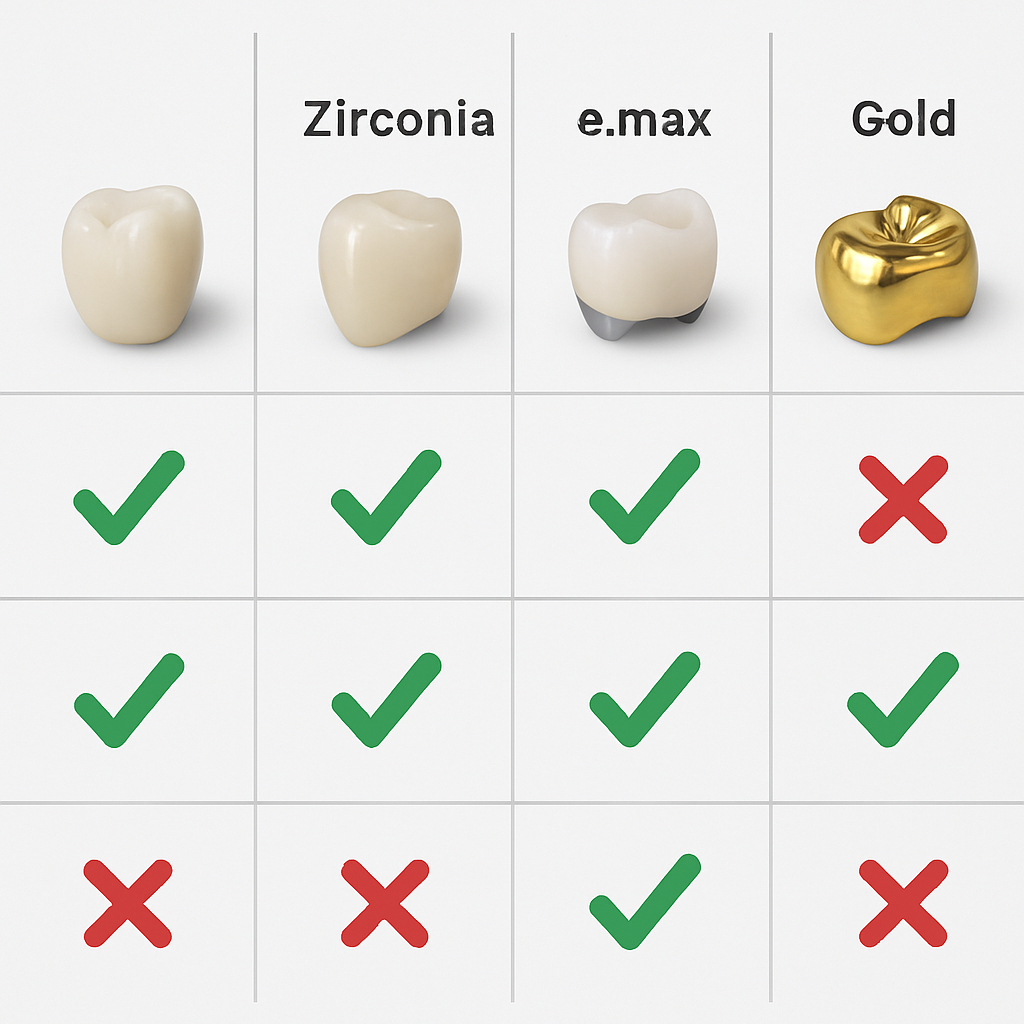
Dental crowns restore a damaged or weakened tooth by covering it like a cap. Choosing the right crown material affects how your tooth looks, how long it lasts, and how it feels when you bite or chew. This dental crown material comparison in Palm Harbor, FL, will walk you through common options, why each one is chosen, and what to expect during treatment, so you can make an informed decision with your dentist.
Common dental crown materials: a quick overview
The main types are all-ceramic (including zirconia and lithium disilicate/e.max), porcelain-fused-to-metal (PFM), full metal (gold and other alloys), and resin/composite. Each differs in strength, translucency (how natural it looks), cost, and suitability for front versus back teeth.
All-ceramic crowns (zirconia, lithium disilicate)
Zirconia
Zirconia is very strong and resistant to fracture, making it a top choice for back teeth and implant crowns that withstand heavy bite forces. It can be milled to fit precisely and is biocompatible. Newer translucent zirconia looks better than older versions but may still be less lifelike than glass ceramics. Pros: durability, minimal wear on opposing teeth, good for bruxers. Cons: slightly less natural translucency for front teeth.
Lithium disilicate (e.max)
Lithium disilicate, often called e.max, offers excellent translucency and a natural look, so dentists favor it for front teeth and visible restorations. It still has good strength for many situations and resists staining. Pros: superior aesthetics, good strength. Cons: may not be ideal for very heavy bite forces or large bridges without reinforcement.
Porcelain-fused-to-metal (PFM) and full metal crowns
Porcelain-fused-to-metal (PFM)
PFM crowns combine a metal base for strength with a porcelain layer for appearance. They balance durability and looks, making them common for both front and back teeth. A downside is the potential for a dark metal line at the gumline over time if gums recede. PFMs are often more affordable than all-ceramic options.
Full metal (gold and alloys)
Full metal crowns, including gold alloys, are extremely durable and gentle on opposing teeth. They often require minimal tooth removal and last for decades. The main trade-off is appearance: metal is obvious, so these are best for molars out of view.
Pros: longevity, fit, low wear.
Cons: poor aesthetics for visible areas.
Resin and temporary crown materials
Resin or composite crowns can be made quickly and cost less, but they wear faster and stain more easily. They are commonly used as temporaries while a final crown is made, or as a short-term, low-cost option. Expect more frequent replacement and reduced longevity compared with ceramic or metal crowns.
Key factors in any dental crown material comparison
Tooth location and bite forces
Back teeth endure high chewing forces, so strength and toughness matter most there. Front teeth need translucency and a lifelike appearance. Your dentist will match material to function and visibility.
Aesthetics vs durability
No single material is perfect for both. All-ceramic options win on looks; metals win on strength. Many choices fall in the middle (PFM or hybrid zirconia). Consider how long you want the restoration to last and how important a natural look is.
Allergies, sensitivity, and biocompatibility
Some patients have metal sensitivities; all-ceramic and high-quality zirconia are excellent alternatives. Discuss medical history and known allergies with your dentist to avoid reactions.
Cost and insurance considerations
Costs vary: resin is the least expensive, full metal and PFM midrange, and premium ceramics (custom e.max or layered zirconia) often cost more. Insurance may cover a portion based on a standard allowance. Check your plan and ask the office about estimates and financing.
What to expect during treatment: steps, timeline, and same-day options
Tooth preparation and impressions
Treatment usually involves preparing the tooth, taking impressions or digital scans, placing a temporary crown, and then cementing the final crown at a second visit. Healing and adjustment take a few days to a week.
Lab-made vs CAD/CAM (same-day) crowns
Lab-made crowns allow for layered porcelain and detailed customization. CAD/CAM same-day crowns (like CEREC) let you get a milled crown and finish in one visit—convenient and effective for many cases. Some materials are better suited to lab fabrication while others work well with same-day milling.
Care and maintenance
Crowns can last 5–20 years, depending on the material and care. Brush, floss, avoid hard items, and see your dentist regularly. Nightguards help prevent damage if you grind your teeth.
Common patient questions answered
Can crowns be whitened?
No—crowns do not respond to whitening treatments. If you want whiter teeth, whiten natural teeth first and then match or replace crowns to the new shade.
Will my crown feel different?
It may feel odd for a few days as you adjust. Bite adjustments are common, and your dentist will fine-tune the fit. Once settled, many patients don’t notice their crown.
Dental crown material comparison for patients near Palm Harbor, FL
For a clear dental crown material comparison in Palm Harbor, FL, Knellinger Dental Excellence helps patients weigh look, strength, cost, and long-term goals. With CAD/CAM same-day options, implant expertise, and experience in cosmetic and restorative care, the team tailors material choices to each smile while offering flexible financing and patient comfort.
Next steps: scheduling a consultation
What to bring and questions to ask
Bring insurance info, a list of medications, photos or notes about cosmetic goals, and ask which materials suit your tooth, budget, and lifestyle.
Financing and timelines
Many practices offer payment plans and accept major insurance. Treatment timelines vary from same-day crowns to two-visit lab work over 1–2 weeks. Call to schedule an exam and get a personalized dental crown material comparison and treatment plan.

